
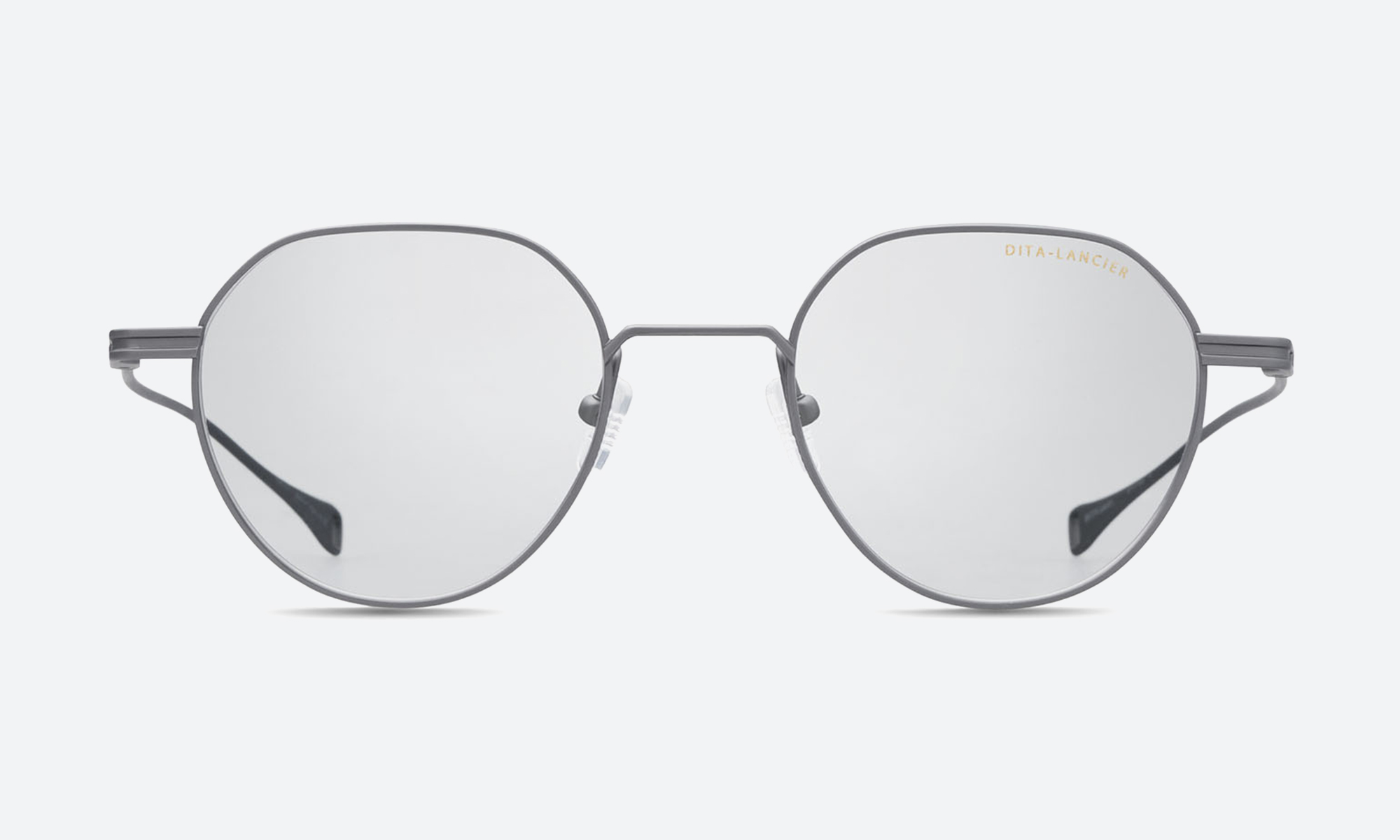
Prescription Eyewear: 5 Decisions for a Perfect Pair
Prescription eyewear is any lens ground to correct your individual vision, and choosing it well comes down to five decisions most buyers never realise they are making. Get them right and you forget you are wearing glasses. Get them wrong and you notice every single day. Our certified optometrists at the Lawrence and Mayo Boutique fit these lenses daily, so this guide covers each decision in the order that matters.
What You Will Learn
- How to read your prescription in two minutes
- The four lens designs and who each suits
- Which lens material suits your prescription strength
- The coatings genuinely worth paying for
- How to choose a frame that carries your lenses well
What Prescription Eyewear Actually Involves
Most people think of glasses as a frame with lenses fitted into it. In practice the lens is the product and the frame is the delivery mechanism. Prescription eyewear is built from four independent choices, and each one changes how the finished pair performs.
The lens design determines which distances you see clearly. The material determines how thick and heavy the result is. The coatings determine clarity, durability and comfort. The frame determines whether all three sit correctly in front of your eyes.
Skip any one of those four and the prescription eyewear underperforms, however good the others are.
Reading Your Prescription
Before ordering prescription eyewear, understand what you are working with. Five figures matter.
SPH, or sphere, is the main correction in dioptres. A minus figure means short-sighted, so distance blurs. A plus figure means long-sighted, so close work blurs. The further from zero, the stronger the correction.
CYL and AXIS appear together and describe astigmatism, where the eye focuses light unevenly. CYL is the strength and AXIS is the orientation in degrees. Blank boxes mean no significant astigmatism.
ADD is the extra reading power added from around the mid-forties, when the eye loses some near focus. It determines whether you need progressive lenses.
PD, or pupillary distance, positions the optical centre of each lens in front of each pupil. Get it wrong and you may feel eye strain even when everything else is correct. It is also the figure most often missing from a prescription, so ask for it.
The 4 Prescription Eyewear Lens Designs
| Design | Corrects | Best For |
|---|---|---|
| Single vision | One distance only | Any single correction, the most common choice |
| Progressive | Distance, intermediate and near | Presbyopia, seamless with no visible line |
| Bifocal | Distance and near | Presbyopia, with a visible dividing line |
| Occupational | Intermediate and near | Desk work and long screen sessions |
In prescription eyewear, single vision remains the right answer for most people under forty. Progressive lenses are the modern standard for presbyopia because the transition between zones is invisible, though they need a short adaptation period and a precise fitting to work properly.
Occupational lenses are the overlooked option. If you spend most of your day between a screen and a desk, they give a far wider intermediate zone than a progressive lens does.
Lens Materials for Prescription Eyewear
Material determines how thick and heavy the finished pair ends up. The stronger your correction, the more this decision matters.
| Material | Index | Best For |
|---|---|---|
| CR-39 plastic | 1.50 | Mild prescriptions, excellent optical clarity |
| Polycarbonate | 1.59 | Impact resistance, children and sport |
| Mid-index | 1.60 | Moderate prescriptions |
| High-index | 1.67 | Strong prescriptions |
| Ultra high-index | 1.74 | Very strong prescriptions, thinnest edge |
The number is the refractive index. A higher index bends light more efficiently, so the lens achieves the same correction using less material. At minus 6.00 dioptres, a 1.74 lens is roughly half the edge thickness of a standard 1.50 lens.
For anything beyond about minus 4.00 or plus 3.00, high-index is worth the premium. Below that the difference is marginal, and standard materials give slightly better optical clarity for less money.
Coatings Worth Paying For
Anti-reflective coating is the one to insist on for any prescription eyewear. It removes the reflections that form on the lens surface, which improves night vision, cuts glare from screens and headlights, and means people see your eyes rather than reflections of the room. On a high-index lens it is close to essential, because higher-index materials reflect more light.
Scratch-resistant hard coating extends lens life considerably and is standard on most quality lenses.
Ultraviolet protection should be built into the lens material rather than applied on top. Confirm it rather than assuming it.
Blue light filtering divides opinion. Evidence for eye damage from screens is limited, but many people find it reduces perceived strain over long sessions. Treat it as a comfort option rather than a medical necessity.
Photochromic lenses darken outdoors and clear indoors, which suits anyone moving frequently between the two. One limitation worth knowing is that most windscreens filter the ultraviolet that triggers them, so they barely darken while driving.
Choosing a Frame for Your Prescription Eyewear
The frame is not a separate decision from the lens. The two interact directly.
Smaller lenses are thinner at the edge for the same prescription, because a minus lens is thickest at its outer edge. If your correction is strong, a moderate frame size will always produce a thinner, lighter result than an oversized one.
Full-rim frames conceal edge thickness, which is why they remain the standard recommendation for stronger prescriptions. Rimless frames display the edge entirely, so they suit milder corrections or need high-index material to look right.
Deeply curved and wraparound styles can distort vision at higher powers, because the lens curvature works against the correction. Classic shapes in acetate or lightweight metal handle prescription eyewear best.
Fit Decides Everything
Prescription eyewear only performs correctly when the lens sits in the right position relative to your eyes. A frame that slides down the nose or sits too far from the face changes the effective correction, which is why a professional fitting is a necessity rather than a nicety.
Three checks matter. The frame should sit level with your brow, the lens should be centred on your pupil, and the temple arms should hold without pressing behind the ears.
This is also why buying online carries real risk. Every measurement can be correct and the fitting still be wrong, because fitting is a physical adjustment rather than a number. Our eye testing and fitting services cover both parts properly.
Caring for Your Lenses
Rinse prescription eyewear under cool running water before wiping, so grit is carried away rather than dragged across the coating. Use the microfibre cloth supplied and avoid tissue, shirt fabric and household glass cleaners, all of which degrade anti-reflective coatings.
Store them in a hard case and keep them out of parked cars, where heat warps frames and damages coatings. Have the fit checked annually, which our boutique services team handles in a few minutes.
Where to Buy Prescription Eyewear in India
Buy prescription eyewear where the eye test, the lens advice and the fitting all happen in the same place. A prescription taken in one location and glazed in another loses the accountability that makes the finished pair work.
An authorised boutique gives you a certified optometrist, verified lens materials, genuine coatings and after-sales adjustment when the frame loosens. If travelling to a boutique is difficult, our home eye test and personal showcase services include an eye test at your home or office, with frames brought to you.
The Verdict
Good prescription eyewear comes down to five decisions made in order: read your prescription properly, choose the lens design for how you use your eyes, match the material to your correction strength, insist on anti-reflective coating, and pick a frame that carries the lens well. Have it fitted by an optometrist and it will serve you for years. To find your pair, visit the Lawrence and Mayo Boutique →.
Frequently Asked Questions
What is prescription eyewear?
Any lens ground to correct your individual vision, whether in glasses or sunglasses, based on measurements taken during an eye test.
How do I read my prescription?
SPH is the main correction, CYL and AXIS describe astigmatism, ADD is the reading power, and PD is the distance between your pupils.
What does a minus number mean?
You are short-sighted, so distant objects blur. A plus number means you are long-sighted and close work blurs instead.
Which lens design should I choose?
Single vision for one correction, progressive for presbyopia with a seamless transition, and occupational lenses for long hours at a screen.
Are high-index lenses worth it?
For prescriptions beyond about minus 4.00 or plus 3.00, yes. They are noticeably thinner and lighter. Below that, standard materials perform well.
Which coating matters most?
Anti-reflective. It improves night vision, cuts screen and headlight glare, and is close to essential on high-index lenses.
Does blue light filtering work?
Evidence for eye damage from screens is limited, but many people find it reduces perceived strain. Treat it as a comfort option.
Can I get progressive lenses in sunglasses?
Yes. Progressives work in sunglass frames, though the corridor placement needs fitting by an experienced optometrist.
Why is pupillary distance important?
It positions the optical centre of each lens in front of each pupil. An incorrect PD can cause eye strain even with the right prescription.
Do strong prescriptions limit frame choice?
Somewhat. Smaller full-rim frames give the thinnest result, and deeply curved wraparound styles can distort vision at higher powers.
What are occupational lenses?
Lenses optimised for intermediate and near vision, giving a far wider screen zone than progressives for anyone working at a desk.
How often should I update my prescription?
Every two years for most adults, and annually once past sixty or if you have diabetes or a family history of eye disease.
Can lenses be replaced in my existing frame?
Usually yes, provided the frame is in good condition. It is often more economical than replacing the whole pair.
Is it safe to buy prescription glasses online?
Measurements can be correct and the fitting still wrong, because fitting is a physical adjustment. An in-person fitting is the safer route.
Where can I get prescription eyewear in India?
At the Lawrence and Mayo Boutique, where certified optometrists conduct the eye test, fit the lenses and adjust the frame in person.
Leave a Reply