
The History of Eyeglasses: 700 Years of Seeing Clearly
Few everyday objects have shaped human progress as quietly as a pair of glasses. They let scholars read into old age, artisans work in fine detail, and pilots see clearly at altitude. Yet the history of eyeglasses stretches back more than seven centuries, a story of glassmakers, monks, inventors and, eventually, master opticians. This is how eyewear evolved from a curiosity into both a medical necessity and a mark of style, and how one heritage house carried that craft into modern India.
A Timeline of Eyewear
| Era | Milestone |
|---|---|
| Before 1200s | “Reading stones” — glass spheres laid on text to magnify letters |
| c. 1286–1290 | First wearable eyeglasses appear in northern Italy |
| 1440s | The printing press multiplies books and drives demand for reading glasses |
| 15th–16th c. | Concave lenses developed to correct short-sightedness |
| c. 1727 | Rigid side-arms over the ears introduced by Edward Scarlett |
| 1780s | Benjamin Franklin invents the bifocal lens |
| 1877 | Lawrence & Mayo opens its first Indian showroom in Calcutta |
| 20th c. onward | Contact lenses, progressive lenses and luxury designer eyewear |
Before Glasses: The Age of Reading Stones
Long before wearable spectacles existed, people magnified text using reading stones, polished segments of glass spheres laid directly on the page. Monks copying manuscripts in the 11th and 12th centuries relied on them to keep working as their eyesight faded. The idea that curved glass could bend light was understood; what nobody had yet done was mount those lenses in front of the eyes. Legend even holds that the Roman emperor Nero watched gladiatorial games through a polished emerald, a reminder that people have always sought ways to see the world more clearly.
The Invention of Wearable Eyeglasses
The first true eyeglasses appeared in northern Italy in the late 13th century. A Dominican friar, Giordano da Pisa, noted in a 1306 sermon that the art of making spectacles was “not yet twenty years old” placing the breakthrough firmly in the 1280s. These early “rivet spectacles” held two convex lenses in frames of wood, bone or metal, balanced on the bridge of the nose to restore near vision to ageing readers.
No single inventor can be named with certainty. The craftsman Salvino d’Armati is sometimes credited, but historians treat the attribution as legend. What is clear is that Venice, with its world-leading glassmakers on Murano, became an early centre of the trade, and even regulated spectacle-making to protect quality.
How Eyeglasses Spread Across Europe?
The printing press of the 1440s transformed demand. As books multiplied and literacy rose, so did the need for reading glasses. Spectacles also became a marker of learning and status, with Renaissance portraits showing scholars and merchants posing with their glasses as symbols of literacy and authority. Several forces pushed eyewear into everyday life:
- The printing press (1440s) more books meant far more readers needing help up close
- Concave lenses (15th–16th c.) for the first time, short-sightedness could be corrected too
- Side-arms (c. 1727) rigid arms over the ears finally kept glasses in place
- Bifocals (1780s) Benjamin Franklin split a lens for both near and distance vision
Frames, meanwhile, were fashioned from tortoiseshell, horn, silver and gold, and owning a finely made pair signalled both wealth and wisdom.
How Sunglasses Entered the Story?
Tinted eyewear developed on a separate track. Arctic peoples such as the Inuit carved snow goggles from ivory and bone thousands of years ago, cutting narrow slits to reduce blinding glare off the snow. Flat panes of smoky quartz were used in 12th-century China, and in 1752 James Ayscough experimented with tinted lenses. Sunglasses as we know them arrived far later: mass production began in 1929, and by the late 1930s aviator styles turned protective eyewear into a global fashion statement.
Eyewear Reaches India — and the Birth of a Legacy
In 1877, Lawrence & Mayo opened its first Indian showroom at Government Place in Calcutta, only months after Queen Victoria was proclaimed Empress of India. Founded by two London families of jewellers and watchmakers, the firm brought exacting European craftsmanship to Indian eyecare, quickly earning a reputation as one of the nation’s finest opticians. You can read the full story in our 149-year legacy.
Did you know? In 1892, Lawrence & Mayo was appointed Ophthalmic Optician to the Commander-in-Chief in India, and in 1923 Queen Mary was seen wearing the house’s “glare protectors” at the Wimbledon finals a tradition of serving royalty woven through our heritage.
From Correction to Craft: Then vs Now
The 20th century turned eyewear into a field of constant innovation. Lawrence & Mayo helped lead that change in India as the first retailer to introduce contact lenses and computerised eye-testing, pioneering firsts detailed across the brand’s legacy. The contrast between the earliest spectacles and today’s frames shows just how far the craft has travelled:
| Aspect | Medieval spectacles | Modern luxury eyewear |
|---|---|---|
| Lenses | Hand-ground convex glass | Precision-coated, progressive, high-index |
| Frames | Wood, bone, riveted metal | Acetate, titanium, beta-titanium |
| Purpose | Restore near vision | Vision + UV protection + personal style |
| Fit | Balanced on the nose | Custom-fitted by trained optometrists |
The Rise of Luxury Eyewear
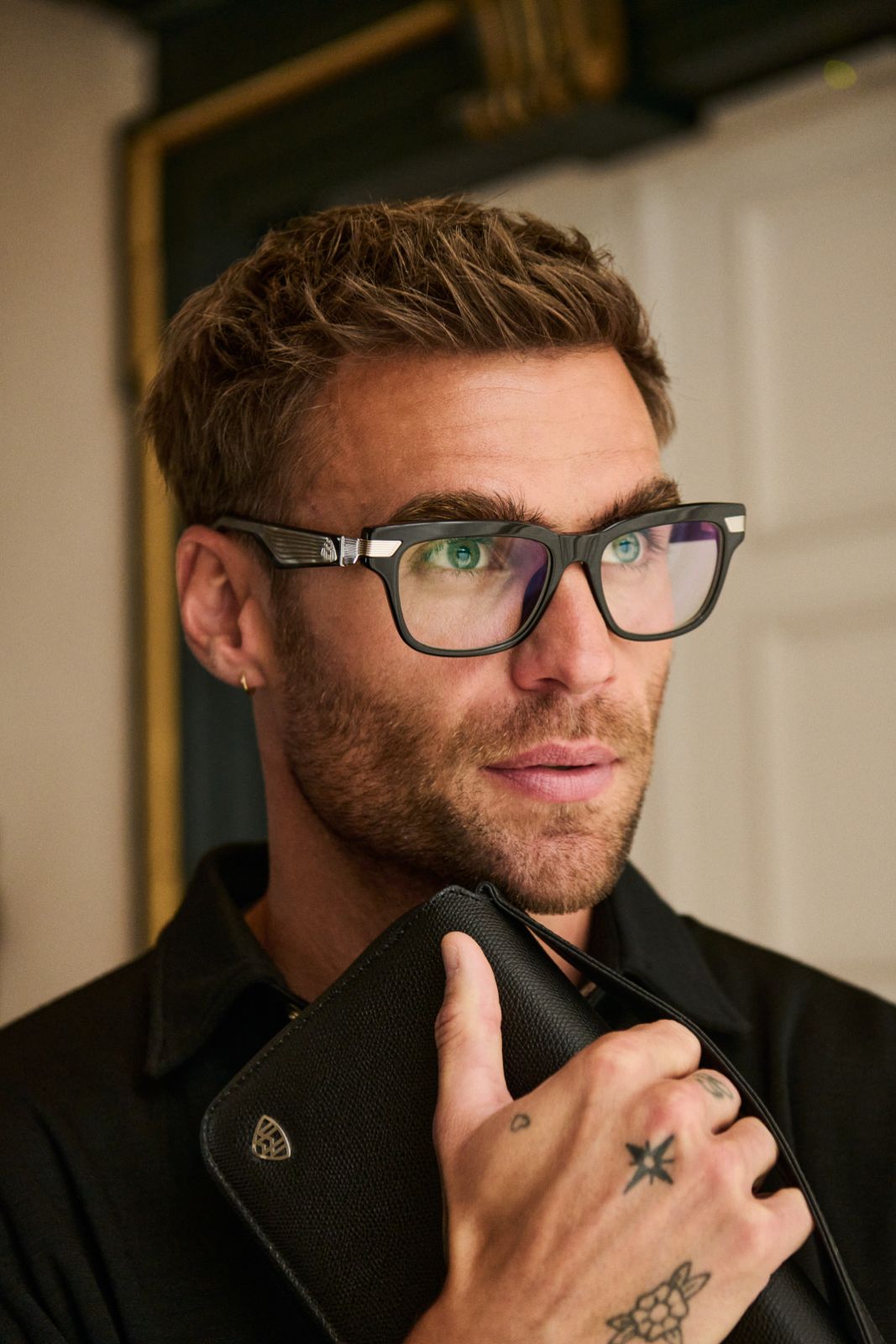
By the early 21st century, eyeglasses had completed their transformation from medical device to personal signature — sculpted acetates, hand-finished titanium, jewel-set temples. That is the tradition the Lawrence & Mayo Boutique continues today. What sets modern luxury eyewear apart is clear:
→ Full UV protection and precision-coated lenses
→ Featherlight titanium and hand-finished acetate frames
→ Custom fitting by trained, experienced optometrists
→ A curated collection of the world’s finest eyewear houses under one roof
From reading stones on a monk’s desk to hand-crafted luxury frames, the history of eyeglasses is ultimately a history of care the human determination to see the world more clearly. To experience where that journey leads today, explore the Lawrence & Mayo Boutique → and discover eyewear shaped by 149 years of precision and heritage.
Leave a Reply