
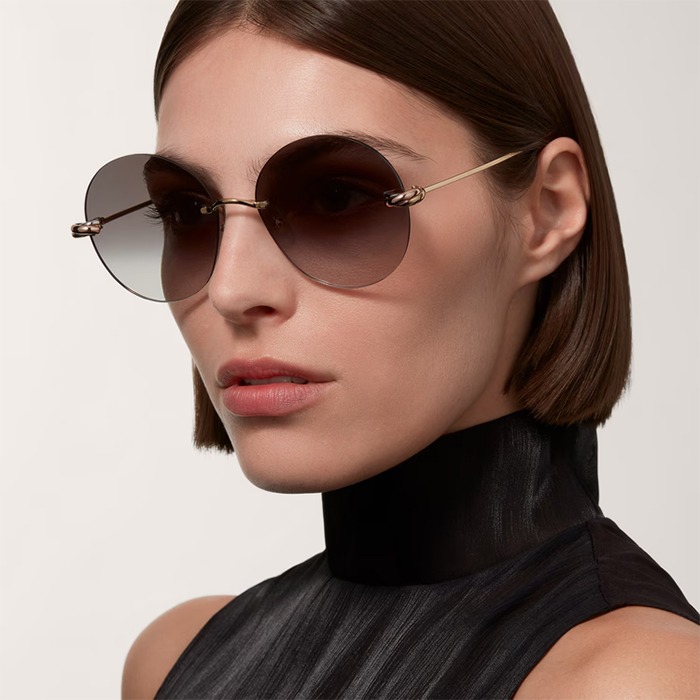
Sunglasses for Women: The Complete Style Guide
Sunglasses for women are rarely just a sun-protection accessory. They are the fastest way to change the mood of an outfit, and the easiest piece of eyewear to get wrong if you buy on trend rather than on fit. This guide walks through the shapes, tints, materials and sizing decisions that decide whether a pair becomes an everyday favourite or sits unworn in a drawer.
What You Will Learn
- The face-flattering shapes and who each one suits
- How lens tint changes what you see and how you look
- The frame materials worth paying for
- The fit checks that matter more than the label size
- Where luxury sunglasses for women genuinely earn the higher price
The Shapes That Flatter Every Face
Cat-Eye — The most recognisable silhouette in womens sunglasses, with the outer corners lifted into a subtle point. A cat-eye frame lifts the whole face and works especially well on round or square faces, where the upward angle adds definition softer features do not naturally have.
Oversized Round — Round frames soften angular features and add a retro, editorial quality that has never really gone out of favour. They suit square and heart-shaped faces particularly well, where the curve balances a strong jawline or a narrower chin.
Aviator — Originally a functional shape, the aviator has become one of the most versatile options in sunglasses for women. The teardrop lens and thin metal frame suit almost every face shape, which is why it remains a safe first purchase for anyone building a small, considered collection.
Rectangular and Square — A clean, structured shape that adds definition to soft, rounded faces. It reads as confident and slightly more formal than curved shapes, which makes it a strong choice for anyone who wants sunglasses that double as a work-appropriate accessory.
Butterfly — An exaggerated, wide-lens version of the cat-eye, with dramatically flared outer edges. Butterfly frames make a genuine style statement and suit oval and heart-shaped faces best, since the width needs a face with room to carry it.
Hexagonal and Geometric — The newest classic. Faceted, angular lenses that read as fashion-forward without tipping into costume territory. They suit oval faces particularly well and pair naturally with minimalist, editorial styling.
Lens Tint: More Than a Colour Choice
Tint changes both how you see and how you look, and the two do not always point the same direction. Whatever the tint, confirm the lens carries full ultraviolet protection, marked as 100% UV or UV400, since colour and protection are entirely separate properties.
| Tint | Best For | Effect |
|---|---|---|
| Grey | Everyday, bright direct sun | Dims brightness without altering colour |
| Brown and amber | Overcast light, most skin tones | Adds contrast and warmth |
| Green | Long days outdoors | Preserves colour accuracy, eases strain |
| Gradient | Driving, city wear | Darker top, lighter bottom for dashboard visibility |
| Mirrored | Statement looks, very bright conditions | Reduces brightness further, bolder finish |
Only the label tells you which frames in the luxury sunglasses collection meet the full UV standard, regardless of how dark or light the tint appears.
Materials Worth Paying For
Acetate is the material behind most of the boldest colours and patterns in womens sunglasses, since pigment runs through the block rather than sitting on the surface. It can be polished back to life years later, which is rare in cheaper injection-moulded plastic.
Titanium is the lightest and most durable metal option, hypoallergenic and resistant to corrosion, making it the premium choice for a frame worn daily across a humid Indian year.
Metal alloy frames sit at a lower price point and suit occasional wear well, though they are more prone to tarnishing with regular perspiration contact than titanium.
Combination frames, acetate fronts with metal temples, are increasingly common across luxury sunglasses for women, offering the visual richness of acetate with the lighter weight of metal at the sides.
Fit Checks Before You Buy
Fit decides whether a pair actually gets worn, and it is the step most buyers skip in favour of the finish.
| Check | What to Look For | Why It Matters |
|---|---|---|
| Width | Frame level with the widest part of your face, no pinching at the temples | Prevents headaches and marks after a few hours |
| Bridge | Rests on the nose without sliding | Stops the frame slipping through the day |
| Lens height | Lower rim clears your cheek when you smile | Resting weight on the cheek causes slipping and marks |
| Weight | Wear the pair for a few minutes before deciding | Discomfort at the bridge or ears only worsens over a full day |
Building a Small, Considered Collection
Most women do not need five pairs of sunglasses. They need two or three that cover the way they actually live.
- A neutral everyday pair, in grey or brown, in a shape that suits your face and goes with almost everything you own.
- A statement pair, in an oversized or butterfly shape, for occasions where the sunglasses are meant to be noticed.
- A driving or travel pair, polarised, in a shape with enough coverage to handle glare from the road or reflected light near water.
Building outward from that order avoids the common mistake of buying three pairs in the same shape and tint, which is how a collection ends up looking full while still leaving gaps in how it is actually worn.
Where Luxury Earns Its Price
The difference in luxury sunglasses for women is rarely visible from a distance. It shows in hinge quality that holds its position for years, lens optics that stay distortion-free at the edges, and acetate that has been polished over days rather than minutes. Explore the luxury sunglasses collection to see the difference up close, or browse styles curated specifically for women.
The Verdict
Choosing sunglasses for women well means starting with shape, confirming full UV protection regardless of tint, checking the fit before the finish, and treating price as a signal of construction rather than branding alone. Visit the Lawrence and Mayo Boutique to try shapes side by side and find the pair that earns a place in daily rotation.
Frequently Asked Questions
1. What should I look for first when buying sunglasses for women?
Full ultraviolet protection. Look for 100% UV or UV400, since tint alone provides no protection at all.
2. Which sunglasses shape suits a round face?
Rectangular, square or angled cat-eye frames add the definition a round face lacks. Avoid round or oversized round shapes.
3. Which sunglasses shape suits a square face?
Round, oval or softly curved cat-eye frames soften a strong jawline. Avoid sharply geometric or rectangular shapes.
4. Does a darker lens mean better UV protection?
No. Darkness and ultraviolet filtering are unrelated properties. A dark lens without a filter is worse for your eyes than wearing nothing at all.
5. What is the most versatile sunglasses shape for women?
The aviator, since its teardrop lens and thin metal frame suit almost every face shape.
6. Which lens tint is best for everyday wear?
Grey, since it dims brightness without shifting how colours appear, making it the most neutral all-round option.
7. What frame material lasts longest in Indian heat and humidity?
Titanium, since it resists corrosion and holds its shape better than metal alloy or standard plastic over a hot, humid year.
8. How many pairs of sunglasses does a woman really need?
Two or three: a neutral everyday pair, a statement pair, and a polarised driving or travel pair.
9. What does a gradient lens do?
It is darker at the top and lighter below, letting you glance at a phone or dashboard without lifting the frame.
10. Are mirrored lenses just a style choice?
Mostly, though they do reduce brightness further than a plain tint, making them useful in very bright conditions as well.
11. How should sunglasses fit at the temples?
Level with the widest part of your face, without pinching, and without sliding down your nose after an hour of wear.
12. Is acetate a good material for bold colours?
Yes. Pigment runs through the acetate block rather than sitting on the surface, so it can be polished back to life years later.
13. Should I buy sunglasses based on trend or face shape?
Face shape first. Trend pieces are worth adding occasionally, but a shape that does not suit your face will go unworn regardless of how fashionable it is.
14. Why do luxury sunglasses cost more than mass-market pairs?
Hinge quality, lens optics free of distortion at the edges, and acetate polished over days rather than minutes, differences that are felt over years of wear rather than seen in a photograph.
15. Where can I buy authentic luxury sunglasses for women in India?
At the Lawrence and Mayo Boutique, where every pair is genuine, backed by warranty and fitted by certified optometrists.
Leave a Reply